Saturday, July 20, 2019

Wise to Be in Wise Again

The Inn at Wise, a stately three-story hotel built in 1910 that is on the National Register of Historic Places, is the perfect center for a barbecue cookoff. Judging in Wise, Virginia, was a great experience again as it was last year because Chillin’ and Grillin’ in the Glades is such a well-organized KCBS-sanctioned contest.

The Inn at Wise is the center for all barbecue activities in July.

Having been in Wise last year, I knew the contest and its arrangements. Music is a big part of the event with entertainers on both days, but judges have to miss performances in the middle of the day when judging occurs. In addition, because judging is “blind” and judging activities extend for several hours, judges miss seeing other street scenes, including the final steps by cooking teams as they prepare their entries.

Wolf's Revenge, a popular team that placed third in the pork category, hands out Scotch eggs (although judges aren't influenced by the kind welcome because judging is "blind"—which team prepares an entry is not known).

Old Virginia Smoke gives samples of burnt ends.
This year I was fortunate to see two special activities. When I arrived, Wolf’s Revenge, one of the top cooking teams, was outside the inn to give Scotch eggs—hard-boiled eggs wrapped in baked sausage—to judges as they entered. In addition, when I left the Inn at Wise after the contest had ended, Old Virginia Smoke, the team that finished third in the brisket category, was giving samples of burnt ends—the best of brisket—to passersby on the street.

Many top and prominent teams from the region were among the 27 teams (two fewer than last year) that competed. The winning team was Rocky Top Barbeque. Second place (reserve champion) was won by Muttley Crew BBQ of Apex, NC. At the table where I judged, two meats—chicken and ribs—were exceptionally superior.

Cooking teams set up on Main Street in downtown Wise.

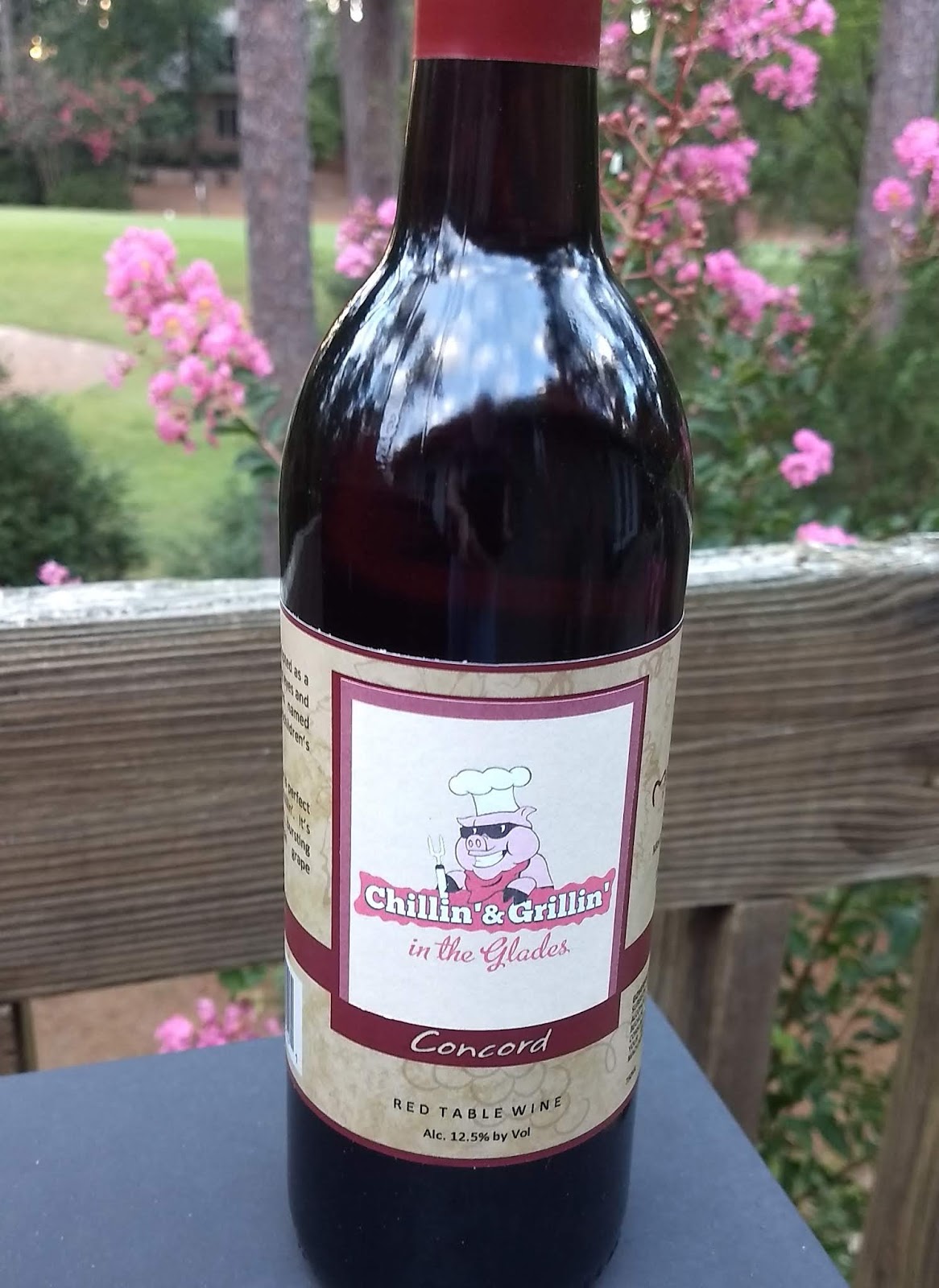
Part of the pleasure of judging in Wise is how kindly the judges are treated by the contest organizers. Before the meat turn-ins began, a drawing for several gifts—trail passes, T-shirts, BBQ sauces, and other souvenirs—was held. Because my lucky ticket was picked, I won a bottle of local wine. Mountain Rose Vineyard, only six miles from downtown, has converted land mined for coal into a lush vineyard, and I got to take its best red wine home with me.

My prize for having a lucky ticket.

Because the contest organizers decided this year to reserve one-fourth of the judge seats for judges who had not been to Wise before (a smart decision to build interest and possibly create a larger pool of judge applicants for future years), I was initially “waitlisted” for this contest. However, as additional registrations of cooking teams were received, more judges were needed, including me.

Judges relax in the inn's conference room before the contest begins.

I feel fortunate to judge again in Wise. Because the contest is so well-organized and judges are treated so generously, I hope to return again.

Trophies are ready for the winning teams.

Saturday, July 13, 2019

Barbecue with Blues in a Small South Carolina City

In Upstate South Carolina, Greenwood holds several events each year to attract locals and visitors to its Uptown area. The premier event is the three-day S.C. Festival of Discovery that combines barbecue (and other food), blues music, arts and crafts, history, and a dynamic street scene.

Judges await the start of their meeting in the Arts Center.

Now in its 19th year, the festival continues to impress and attract top barbecue cooking teams for a major regional cookoff. Because 93 had registered (although only 83 competed), 16 tables of judging officials — each table with six judges and a table captain — were organized. Even though a lot of judges are needed, registration usually ends on the day in January that it opens. Lindsay Burns, the organizer, recommended to the judges at their meeting that they apply immediately for the contest next year when registration begins because the contest is so popular.

Cooking teams set up along Main Street in Uptown Greenwood.

In addition to the standard meat categories — chicken, ribs, pork, and beef brisket — of a barbecue cookoff sanctioned by the Kansas City Barbecue Society, the festival holds contests for hash, “anything goes,” and dessert. For this contest, hash is made with potatoes, onions, spices and other seasonings with beef or pork, or both. Entries in the “anything goes” category include at least two products (sausage, ham, beef franks) of Carolina Pride, the primary festival sponsor.


All judging activities were held in the Arts Center.

So many teams were inspired to compete because the sizable prize fund is usually large for a BBQ contest. The festival awarded more than $23,000 in prizes — $1,200 in the hash, anything goes, and dessert contests each — with the remainder presented to the successful barbecue teams. The top prize of $3,000 with a trophy for being grand champion was awarded to Smokin’ Gringo’s BBQ, which aced out Palmetto Pitmasters, the reserve champion, by less than one point.

The center stage featured entertainment on each day of the festival.

The festival also includes a people’s choice contest with the winning team being the one that receives the most votes. In addition, young people from ages six to 15 show off their grilling skills in a Kids Que contest that requires them to use ground beef and bacon in dishes that they prepare.

The Blues Doctors entertain on Friday night, one of their three gigs at the festival.

A popular component of the festival is the blues cruise, with regional performers as well as others from as far away as Indiana, Mississippi, and Washington, D.C. It included 21 ensembles (solos to quartets) performing on the main stage as well as at 12 locations, such as the Arts Center, where judging activities were held on Saturday.

I found Adam Gussow playing as part of The Blue Doctors — I had used his materials in a class that I taught.

One month before the cookoff, Greenwood hosts another major event known as the S.C. Festival of Flowers. The entire city that has slightly more than 22,000 residents dresses up for the occasion, several homes and gardens are open for tours, and more than 40 topiaries decorate the Uptown area. Fortunately for barbecue and blues fans, the topiaries are still on display during the second weekend in July, when the Festival of Discovery is held.

A topiary of a Jeep anchors one corner of an intersection.

I’ve made a note to apply as a judge as soon as registration begins next January. The Festival of Discovery is a delightful event to attend, and I hope to return.

Look closely to see the alligator topiary in the foreground on Main Street.


Sunday, June 16, 2019

Starting a Whole Hog Tradition in Knightdale, NC

When Boy Scout Troop 365 of Knightdale, NC, considered ideas for a community event that would also be a fundraiser for its projects, it thought that a whole hog cookout with a car show would be a winner. They were right. It was.
Cooking teams set up in the spacious Knightdale Station Park.
Held on Father’s Day at Knightdale Station Park, the inaugural Knightdale Classic Car Show and BBQ Cookoff attracted skilled pitmasters, classic cars, and an appreciative public, and it was a huge success. The park—a new community gathering space with trails, athletic fields, playground area, and dog park—was the perfect location. Cooking teams and exhibitors at the car show had more than adequate space.
Classic cars arrive early for their show (cooking teams are in the background).
Ten teams competed in the cookoff, which was sanctioned by the N.C. Pork Council and is an event in the series to determine the Pitmaster of the Year as well as the Whole Hog Barbecue Champion at the end of the year. The level of competition was very high because the participating pitmasters included past state champions, and seven had already been winners at regional events this year.
The pig at Chris Fineran's site is in shambles after the judges have finished their evaluations.
For at least two pitmasters, this event was their third whole hog cookoff in four days, an unusually demanding schedule that only the brave (and talented) would even try. Before they arrived in Knightdale to be ready for judging on Saturday, they had been in Burgaw (the event was N.C. Blueberry Festival BBQ Cookoff) for judging on Thursday and Louisburg (BBQ in the ‘Burg) on Friday. Surprisingly, no one showed signs of tiredness.
Teams await the result as their scores are tallied.
My fellow judges—Lubin Prevatt, Don Carlough, and Tim Croon—and I were impressed how well the pitmasters did. Kevin Peterson (state champion in 2017) placed in first, a few points ahead of Chris Fineran (the reigning state champion) and Roy Parker (state champion in 2006). All three qualify to compete in the cookoff this fall to determine the 2019 state champion. The pigs, supplied by Brewer Meat Products of Wilson, NC, were all within three pounds of 125 pounds, an amazing consistency that many contest organizers (and pitmasters) dream about.


A site after the judges' visit tells a story: the judges are very thorough in their evaluations.
Neil Barnhill, the event organizer, is a regular on the BBQ circuits as the pitmaster of Black Iron Cookin’, a team that competes in events sanctioned by the Kansas City Barbeque Society. The day before the event in Knightdale, Barnhill had competed in nearby Apex, NC, where 38 teams had entered the cookoff of the Peak City Pigfest.
Neil Barnhill, who competed in an event on the previous day in Apex, is the pitmaster of the Black Iron Cookin' team.
When the event ended, Barnhill had a lot of reasons to be proud. His son, a competing pitmaster, did very well in his first contest. Next, the cookoff attracted top talent, unusual for an inaugural event. Also, the weather cooperated; the weekend was beautiful. Oh, the barbecue was excellent.

After the judging was completed, the barbecue was prepared for sale to the public: $10 for a pound and $6 for a sandwich plate. All proceeds went to the Scouts to provide funds for a future bus, camps and trips, equipment replacements, and other activities.
A sense of nervous calm permeates the cooking area before the judging activities begin.
In only its first year, the Knightdale Classic Car Show and BBQ Cookoff has created a solid foundation for a great annual tradition, once again proving an old saying: If you want something done well, give it to the Scouts.

Saturday, June 1, 2019

Four Generations of Creating a Legacy and Still Serving

J.S. Pulliam Barbeque in Winston-Salem, NC, has been serving barbecue for a long time. Started in 1910, Pulliam is amazing because its longevity extends so long. Even more amazing is that Pulliam has created its own flavor profile that separates it from the two primary barbecue styles of North Carolina: eastern and Lexington (or western).

J.S. Pulliam Barbeque stays busy after opening at 10 a.m. on Tuesdays through Saturdays.

The barbecue is minced — not chopped or pulled. Because Pulliam’s is only 2½ miles from the T.W. Garner plant on Indiana Road where Texas Pete, a nationally leading Louisiana-style hot sauce, was born in 1929 (almost two decades after Pulliam began his business) and is still produced, it’s not surprising that the barbecue it is flavored with a hot sauce, which makes it distinct from eastern N.C. (pepper-vinegar) and Lexington style (vinegary with ketchup) barbecue. Even the white slaw that accompanies the sandwich is sharp, not sweet. 


The barbecue sandwich is top with slaw and dressed with Ed's Hot Sauce.

The hot sauce is named for Big Ed who concocted it in 1945. (Five-ounce bottles are sold for $2.95 each.) The distinctive flavor is a big hit with regular customers who appreciate its uniqueness. Tourists, on the other hand, who expect a traditional N.C. flavor often react with surprise on social media. Of almost 50 reviews on TripAdvisor, most rate the restaurant excellent or very good, but one rating is poor and two are terrible (the lowest rating —  the minced BBQ with hot sauce must have been a shock).

The menu has everything anyone would want.

Pulliam makes all barbecue, sauce, and slaw on site. The menu is simple and limited: barbecue sandwich, hot dog, snacks, and drinks. Both the sandwich and hot dog are served wrapped in waxed paper. Barbecue can also be ordered by the pound as well as by the cup (half pint and one pint). Pulliam is unusual because the barbecue sandwich can also be ordered with cheese. Don’t expect a lot of sides with a sandwich. If you want something extra, you can choose from small racks of chips or pies. The only beverages are bottles and cans of soft drink, with Cheerwine prominently displayed, kept in old-time coolers.

Customers line up to pay after ordering.

The restaurant isn’t recognized on the historic N.C. Barbecue Trail developed by the N.C. Barbecue Society because it doesn't cook with wood, but it predates most establishments on it. Although the restaurant is named for its barbecue and customers come specifically for it, it’s more renowned for hot dogs. In 2011 Rachel Ray Magazine and Reader’s Digest proclaimed Pulliam’s hot dog to be the best in the South. In 2015 MSN News ranked it in the Top 50 of “America’s Best Hotdogs.” In 2018 People magazine, with the editors of Food & Wine, named it the best one in North Carolina. 


In an earlier location decades go, Pulliam was a popular lunch spot.

In addition to the sign that says the business opened in 1910, the best clue that Pulliam has been in business a long time is the small space inside: there are no places to sit and eat. Everyone stands. As Mark Flynt, the owner, told Wake Forest University students in 2015, “If you can stand up, you can eat more.” Customers line along a wall to enjoy their lunch, although a few take their food to go. While I was there with my brother, two city police officers walked behind the counter where they stood and ate their lunches. In the “old days,” picnic tables outside offered a brief respite to sit and eat, but they have been long removed. However, the “Drink Cheerwine” sign still adorns the front, although it is more faded. 


Snacks, coolers, and memorabilia line the wall.

John S. Pulliam, the founder, opened the business in 1910 in its original location on North Liberty Street in Winston-Salem. He sold the business in 1958 to Richard (“Big Ed”) Flynt, his first cousin, who began working for Pulliam at age 10 and continued to work there before becoming the owner. Flynt continued the tradition of specializing in barbecue and hot dogs to satisfy the working class on the city’s north side. The nondescript black-and-white striped building on Old Walkertown Road is the business’s third location, where it’s operated by Flynt’s son Mark. Big Ed’s granddaughter Caitlyn Flynt Mordock is waiting to take over from her father. “When he retires, I’ll run the business,” she told me.

Caitlyn Flynt Mordock began helping her father cook when she was 5.

Loyal customers clearly also come here for the atmosphere, which includes feeling like you are among family. I enjoyed mingling with the regulars as we all stood and ate barbecue. (However, next time I might order a hot dog.)

Big Ed's Hot Sauce
The cookhouse in back is quiet after the pigs are cooked.

Saturday, May 18, 2019

Judging Barbecue Before Sampling Moonshine

It was only a matter of time before an enterprising organizer connected moonshine and barbecue. Of course, the location has to be Wilkes County, NC, that has popularly been referred to as “The Moonshine Capital of America.” The Stills and Grills Fest, which had a preliminary backyard event last year, was sanctioned this year for the first time in the master series of competitions held by the Kansas City Barbeque Society.


As I drove northwest into North Wilkesboro on U.S. 421, I passed a sign proclaiming that section of the road as “Junior Johnson Highway.” This local racing legend (born Robert Glenn Johnson, Jr.) was one of about 700 people in Wilkes County who made a living by hauling illegal whiskey to its markets. Because North Wilkesboro is located in the foothills of Appalachia, it was a major distribution point for transporting moonshine. The highway linked the backwoods and hills to large cities throughout the South and mid-Atlantic.

A portable still of Copper Barrel Distillery, based in North Wilkesboro, sits among the cooking teams.

Local distilleries, now legal and gaining a far-reaching reputation for their artisanal spirits, source their grains from area farms much like earlier generation of distillers. The corn used by Copper Barrel, for example, comes from Linney’s Water Mill, which has been in business for 187 years. 

Cooking teams set up along the perimeter of the county's agricultural fairgrounds.

Finding moonshine at a barbecue cookoff is not as surprising as meeting a judge who has a pork allergy. Although Bill Moon, from Florida, is a certified judge, he can only participate as a table captain or another capacity requiring a judge. Because he cannot be sure than any meat (chicken, brisket) from a team has not been in contact with pork, he never tastes any entry, but he does enjoy the camaraderie of being at cookoffs and has also competed as a pitmaster.

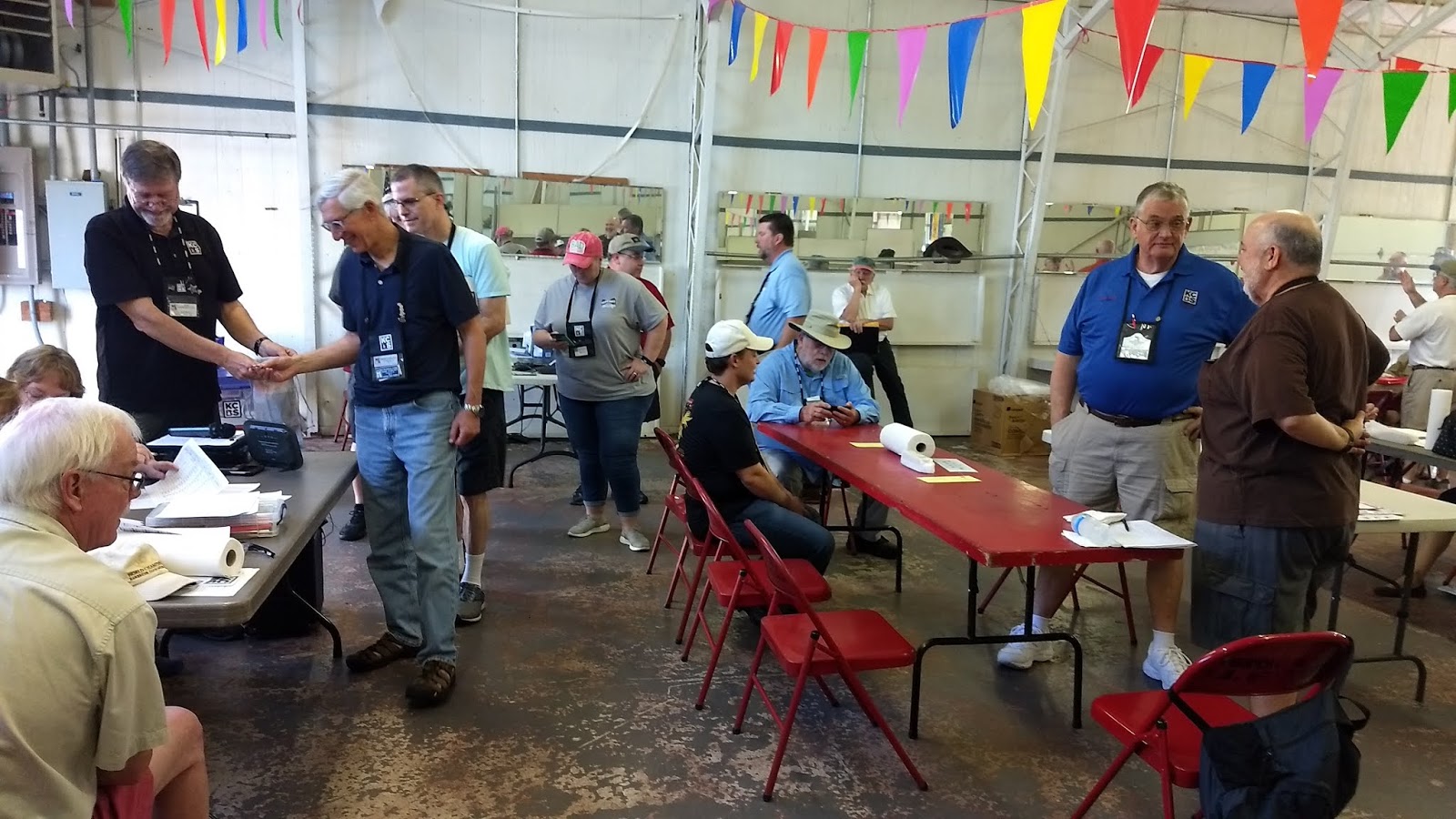
Judges sign in and receive their table assignments.

In its first year as a fully sanctioned competition, Stills and Grills was an excellent cookoff and has set a good foundation to grow and develop in future years. The 21 cooking teams were spread along the perimeter of the county’s agricultural fairgrounds, but the “artisanal spirits” on display by the local distilleries attracted more attention. Tasting tickets were sold for $10 at the gate to people 21 years of age and older.

The turn-in table is ready for the first entries.

Some barbecue contests end with a cone of ice cream or dish of banana pudding for the judges. In North Wilkesboro, you wouldn’t expect anything other than a sample (or two) of an artisanal spirit, or as it’s better known, moonshine. When the judges were dismissed from their tables, watching them head out quickly to the sample booths made me wonder what they came for: judging barbecue or moonshine.

Local distilleries are ready to pour samples of their products.

Second place in the ribs category helped Two Old Men & A Grill to finish third overall in the contest.

Saturday, May 4, 2019

Judging in Kannapolis Again

Jiggy with the Piggy in Kannapolis, NC, is a preeminent cookoff each May for both barbecue cooks and judges because the organizers are such professionals, which shouldn’t be a surprise: they are employees of the city. Every detail of the contest is planned and executed superbly, and every year the event builds on the knowledge learned and experience gained from past contests.

City employees help judges as they arrive.

In previous years, 75 or more cooking teams had completed, but only 60 teams were selected to compete this year. The reduction in teams provided more area for vendors and extra space to move teams in case of inclement weather. However, that number of cooking teams still required a lot of judges – all seated at ten tables – and several were from out-of-state. At least one was a first-time judge and some had participated in more than 50 contests. I was glad to return because I had enjoyed last year’s contest. 

Judges meet in the city hall of Kannapolis.

For this year’s contest that was again sanctioned by the Kansas City Barbeque Society, teams from six states competed for cash prizes valued at $16,225, an increase in the amount won last year. Receiving a check for $1,500 for placing first as the grand champion was the Muttley Crew BBQ team from Apex, NC.

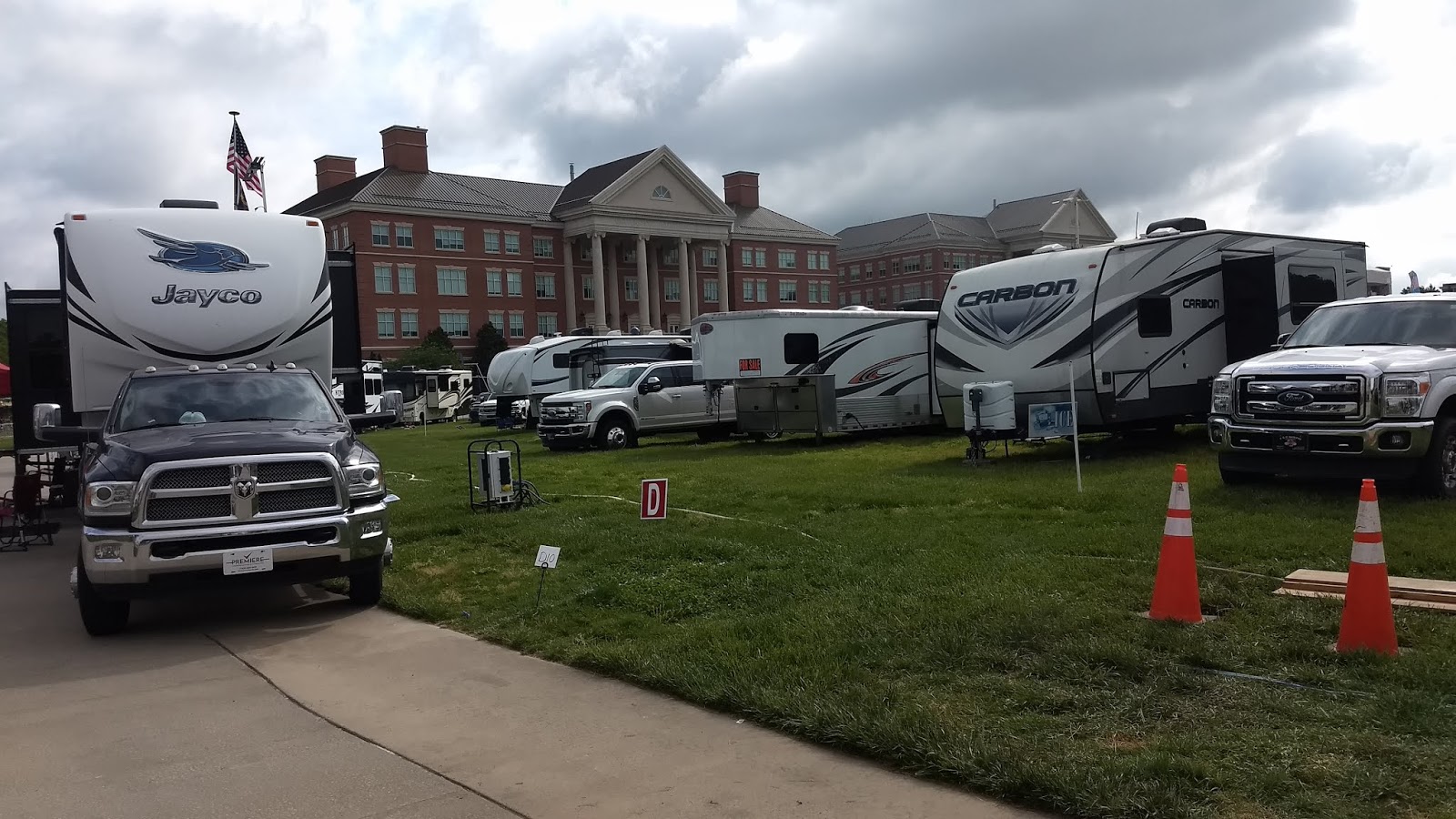
Cooking teams set up on the greenspace of the North Carolina Research Campus.

The North Carolina Research Campus, where the festival is held, is home to research activities that advance health, nutrition, and agriculture. The impressive buildings of the campus enclose a park-like greenspace where the barbecue teams set up and the other festival activities are held.

Old Colony Smokehouse from Edenton, NC, placed first in the pork category and won second place in the people's choice contest.

In addition to cookoff activities, the three-day festival this year featured more than 100 arts and craft vendors. The entertainment schedule included concerts, fireworks, movies, a 5K run/walk, and children’s events such as the Zucchini 600, a contest for children to build a racecar out of zucchini and compete for prizes.

Jiggy with the Piggy includes many children's activities.

A popular event that entertains the Kannapolis community, Jiggy with the Piggy will also continue to be popular with cooking teams and judges because it is so well organized and executed.

City employees offer banana pudding to judges after all entries have been judged.

The grand champion's check was awarded to the Muttley Crew BBQ team. Photo by City of Kannapolis.

Saturday, April 27, 2019

Celebrating Agriculture in Burlington with a Cookoff

Homegrown in the Park is an annual celebration of agriculture in Alamance County of North Carolina. A combined celebration and “agricultural experience,” it showcases the past, present, and future of agriculture in the county and is held in City Park in downtown Burlington by Alamance County Farm Bureau.

Cooking teams set up behind the YMCA  building.

The event includes antique tractors and other farm equipment, exhibits, demonstrations, live music, and other entertainment. The Farm Bureau once had organized tours of area farm. Because it decided that a farm day in the downtown area would attract a larger audience, it changed the format to bring “the farm to the city.”

Trophies are ready for the winners.

Although some people also come for the free ice cream that they receive after visiting the exhibits, more people probably attend for the free barbecue sandwiches that is also provided. The barbecue is prepared by pitmasters who compete in a whole hog cookoff that is part of the Whole Hog Barbecue Series sponsored by the N.C. Pork Council.


Judging gets underway at 8 a.m. Photo by Alamance County Farm Bureau.
All the preparations and cooking occur during the night to be ready for the judging that begins at 8 a.m. This year 12 pitmasters competed for the top prizes, and judging was finished around 9 a.m. However, because the public doesn’t start showing up until 10 a.m., the only part of the whole hog cook that they see (and taste) are the sandwiches. The activities of the event continue until 4 p.m.

After being judged, each pitmaster chops barbecue for the sandwiches.

The top three finishers qualify to advance and compete in the state cookoff in September to determine the Whole Hog Barbecue Champion among all contest winners this year. Chris Fineran, who already placed first in an event in the series earlier this year, won top honors at Homegrown in the Park. 

The line forms early for free barbecue sandwiches. Photo by Alamance County Farm Bureau.

Burlington is the place to be each April to celebrate farm history, experience agriculture in a park setting, and enjoy barbecue sandwiches (with ice cream). However, without farmers and pitmasters, this event couldn’t celebrate as magnificently as it does.

After all judging activities have been completed, it's time for a picture.